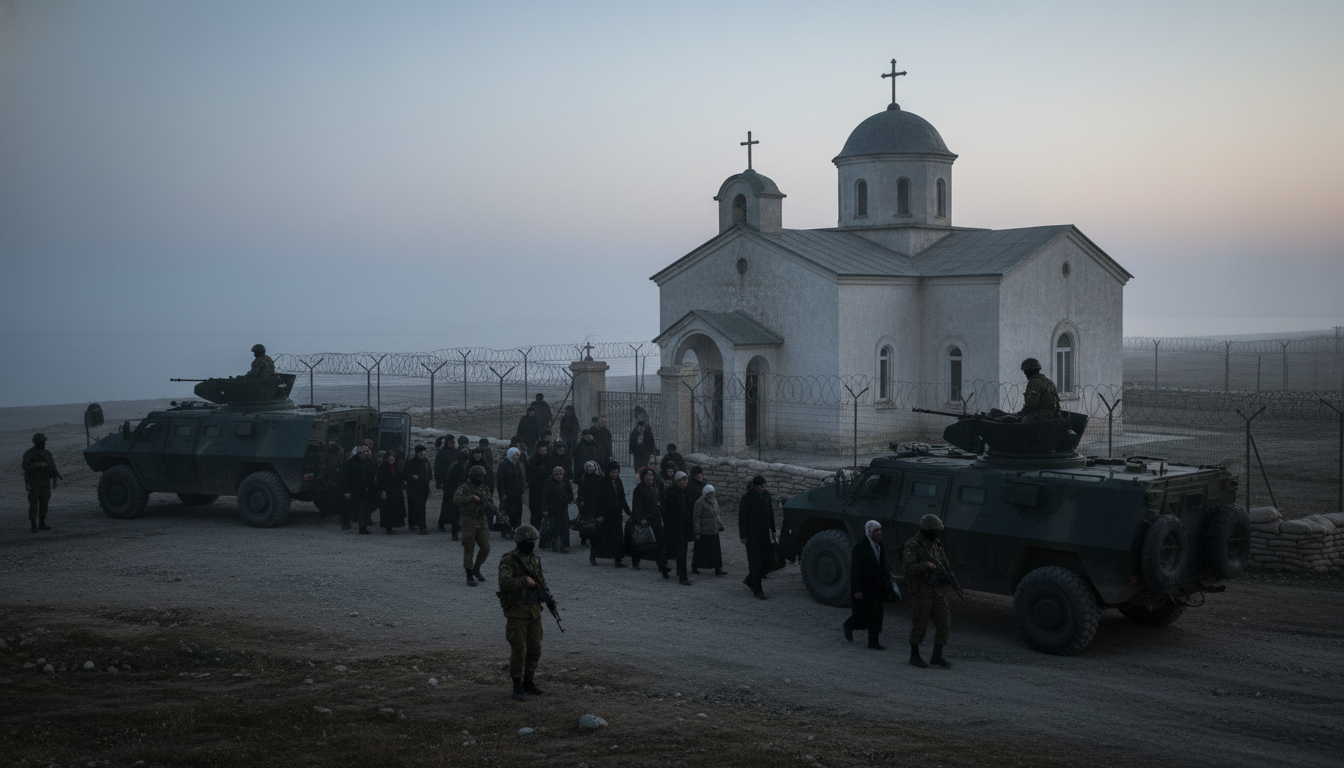
The recent detentions in Balkanabat, targeting Turkmen converts during Easter services, underscore the pervasive state control over religious practice in Turkmenistan. This operation near the city's only Christian church signals a continued suppression of religious freedom, particularly for non-traditional denominations. The incident is indicative of a broader pattern of surveillance and intervention by state security services.
Political Landscape
Turkmenistan operates under a highly centralised authoritarian system, where the state maintains strict control over all aspects of public life. This includes a robust security apparatus designed to preempt any form of organised dissent or independent social activity. The government’s authority is paramount.
The ruling elite has consistently prioritised internal stability, interpreting any independent social gathering, including religious congregations, through a security lens. This approach limits civil liberties and ensures adherence to state-sanctioned norms. The cult of personality around the president further reinforces this top-down control.
Public spaces and institutions are subject to constant oversight, reflecting the government's deep-seated mistrust of unofficial associations. Such vigilance is a cornerstone of maintaining political order in a country otherwise prone to opacity. These measures create an environment of conformity.
State Control and Religious Policy
Religious freedom in Turkmenistan is officially guaranteed but severely restricted in practice, particularly for groups not aligned with state-approved religious bodies. The government requires all religious organisations to register, a process often made arduous or impossible for smaller communities. Unregistered religious activities are illegal.
While Sunni Islam is the dominant faith and Orthodoxy has a historical presence, the state views conversions and the growth of minority Christian denominations with suspicion. These groups are often perceived as foreign influences or potential sources of social fragmentation. They face persistent pressure.
The state’s concern extends to anything that might challenge its narrative of national unity and cultural homogeneity. Individuals who convert from the dominant faith are particularly vulnerable to state scrutiny and social ostracism. This policy reflects a broader effort to control national identity.
Targeting converts during a significant religious holiday underscores the deliberate nature of these operations. It communicates a clear message regarding the limits of religious expression and the state’s intolerance for perceived deviations from sanctioned practices. Such actions aim to deter others.
Coordinated Security Operations
The coordinated nature of the security operation in Balkanabat suggests a planned and systematic approach, rather than an isolated incident. This level of organisation points to intelligence gathering and deliberate action by state security services. Surveillance of religious communities is evidently routine.
Detaining dozens of individuals indicates a significant deployment of resources and a clear intention to disrupt. Such operations are designed to send a deterrent message, both to the specific community and to others contemplating similar independent activities. The objective is to enforce compliance.
The timing of the detentions during Easter services maximises their disruptive impact and visibility. This serves to publicly reassert state authority over private religious observance, demonstrating the state's reach into even ostensibly personal domains. It reinforces an atmosphere of apprehension.
Regional Context and International Scrutiny
Turkmenistan’s approach to religious freedom aligns with, and in some aspects exceeds, the restrictive policies observed in several other Central Asian states. While all regional governments maintain tight control over religious life, Turkmenistan remains among the most insular and repressive. Its isolation is notable.
The international community, including human rights organisations, consistently raises concerns about Turkmenistan's human rights record, particularly regarding religious freedom, freedom of assembly, and political expression. However, the country’s closed nature limits effective external pressure. Engagement is challenging.
Ashgabat largely dismisses international criticism, framing its policies as essential for national security and social cohesion. This stance perpetuates a cycle of isolation and domestic repression, with little incentive for policy shifts. The focus remains on internal control.
Outlook for Religious Freedom
The recent events in Balkanabat suggest that prospects for meaningful improvements in religious freedom in Turkmenistan remain bleak. The government shows no indication of relaxing its stringent controls on religious practice or civil society. The current trajectory is one of continued suppression.
Minority religious groups, especially those perceived as new or foreign, will likely continue to face surveillance, harassment, and administrative barriers. Converts, in particular, will remain vulnerable to state intervention and social pressure. This environment fosters self-censorship and fear.
Any change would require a fundamental shift in the government’s approach to governance and civil liberties, which appears unlikely in the short to medium term. The entrenched authoritarian system prioritises control above all else. Deep-seated reforms are not anticipated.
- News
Delays And Rising Costs: Central Asia Feels Fallout From Iran War
21 Apr - Analysis
The marble mirage: Ashgabat’s record-breaking facade contradicts Turkmenistan’s reality
21 Apr - Energy
Turkmenistan Advances Galkynysh Gas Field Development to Increase Exports to China
20 Apr - Energy
Central Asia Emerges As Strategic Energy Player Amid Oil Crisis
20 Apr