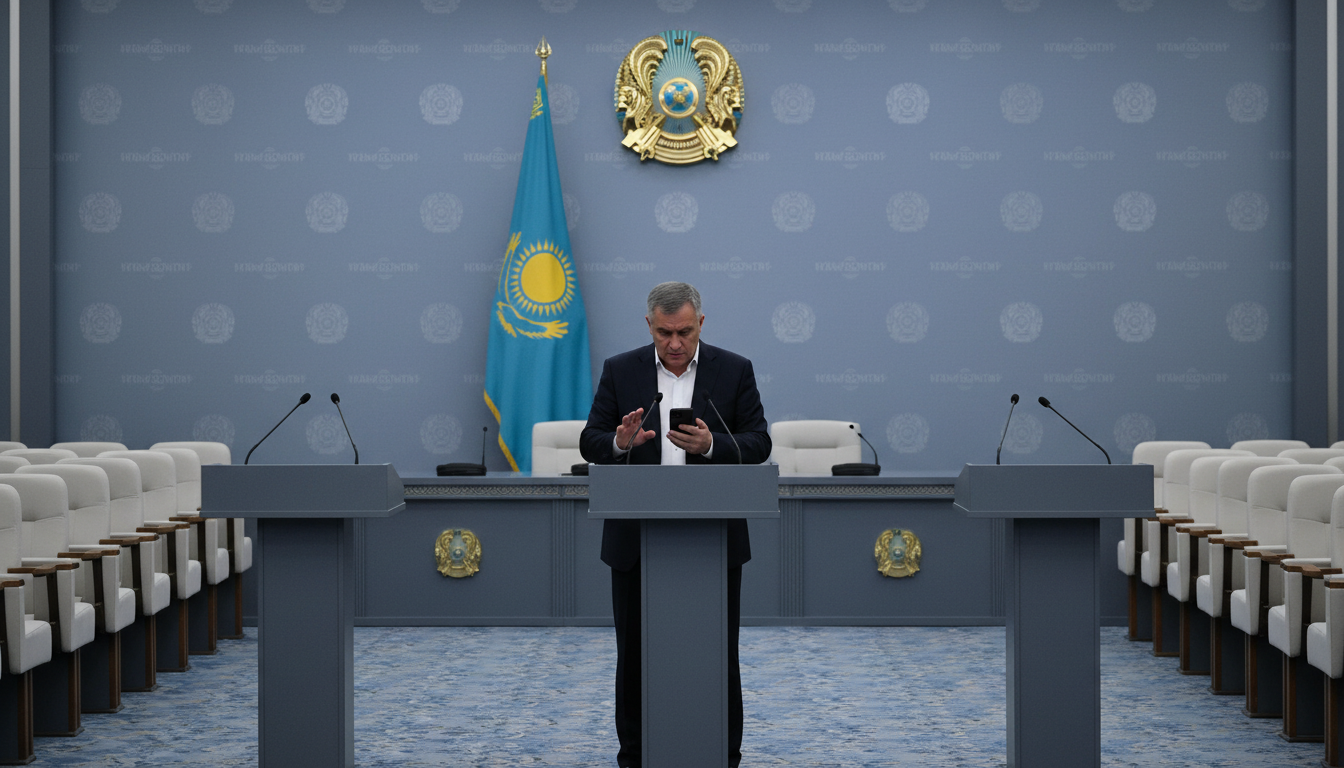
Kazakh activist Bagdat Togysbayev’s recent detention and subsequent phone issues highlight digital freedom concerns. His five-day arrest followed public calls for the release of Atazhurt rights movement members, signalling persistent pressures on civil society. This incident serves as a stark reminder of challenges faced by human rights advocates in the country.
The unsettling anomaly in his phone's behaviour after release raises pointed questions about the methods employed in monitoring perceived dissent. Togysbayev found this digital intrusion more disquieting than his time in custody, highlighting surveillance's psychological impact. International observers watch these developments with increasing scrutiny.
Dissent and State Response
Bagdat Togysbayev’s detention fits a broader pattern of interactions between Kazakh authorities and civil society actors. Public calls for political prisoner releases, like those associated with the Atazhurt movement, frequently meet swift official responses from the state. This dynamic highlights the constrained space for independent activism in Kazakhstan.
Authorities justify such actions using public order or national security frameworks, claiming measures are necessary for stability. Critics, however, view these as attempts to suppress legitimate expressions of dissent and discourage further activism. The state’s reaction clearly signals its intent to maintain firm control over public discourse.
This approach creates an environment where civil society actors must weigh the potential personal repercussions of their advocacy. Perceived ubiquity of state monitoring can deter others from engaging in public criticism or forming independent movements. This ultimately narrows avenues for genuine civic participation and feedback.
Digital Tools of Control
Togysbayev’s reported phone anomalies strongly suggest the deployment of advanced digital surveillance tools. Such incidents indicate an evolving state capacity to monitor communication channels used by activists and other critical voices. This raises significant concerns for individual privacy and the security of digital exchanges among citizens.
The nature of the phone issues implies sophisticated intervention beyond simple interception or data extraction. This could involve stealthy spyware installation or remote access for intelligence gathering or communication disruption. The incident suggests an expanding state digital toolkit for internal security management.
Lack of transparency surrounding these alleged surveillance activities erodes public trust in digital infrastructure and services. When citizens suspect device compromise, it fosters self-censorship and a chilling effect on online expression. This impacts digital literacy and secure communication practices in the country.
Legal Ambiguities and Rights Concerns
Kazakhstan's legal framework for digital security often grants broad powers to state agencies, sometimes at the expense of individual privacy rights. Information security and public order legislation can be interpreted in ways that justify extensive surveillance. This creates an opaque environment for online activists and journalists.
While Kazakhstan undertakes some legal reforms aimed at modernising its justice system, practical application in areas like digital rights remains contentious. The gap between stated rule-of-law intentions and activist experiences questions the depth of these reforms. This concerns international human rights monitors and affects Kazakhstan's image.
Lack of clear, independent oversight mechanisms for digital surveillance significantly exacerbates these concerns. Monitored citizens often lack effective avenues for redress or transparency regarding activity scope and legality. This ambiguity fosters an environment where perceived abuses occur with limited accountability.
Kazakhstan's Regional Posture
Togysbayev’s case reflects broader trends observed across Central Asia, where states often balance economic modernisation with firm political control. Digital surveillance is increasingly deployed by governments to manage information flows and prevent organised opposition. Kazakhstan, as a leading regional power, frequently sets precedents for its neighbours.
The country's stated commitment to reform and international engagement often clashes with reports of human rights infringements, including digital rights. Such incidents complicate Kazakhstan's efforts to project an image of a modernising, rights-respecting state. They invite further scrutiny from multilateral bodies, potentially affecting diplomatic relations.
These developments can also impact Kazakhstan’s foreign investment appeal, especially for Western countries that prioritise good governance and rule of law. Erosion of digital freedoms and perceived arbitrary detentions may deter businesses concerned about data security. This adds an economic dimension to the human rights discussion.
Prospects for Digital Freedom
Bagdat Togysbayev's experience underscores the ongoing tension between state security imperatives and fundamental digital freedoms in Kazakhstan. Continued surveillance against activists suggests a persistent strategy to control public discourse and pre-empt organised dissent. This approach could stifle independent civil society and open political debate.
Looking ahead, future digital rights in Kazakhstan will likely depend on international pressure, domestic civil society resilience, and evolving government policy. Technological advancements will continue presenting challenges and opportunities for both state control and citizen resistance. The contest for digital space is ongoing.
A credible commitment to upholding privacy and freedom of expression online would require greater surveillance transparency and robust legal safeguards against their abuse. Without these significant systemic changes, incidents like Togysbayev's will continue fueling concerns about digital liberties and the rule of law.