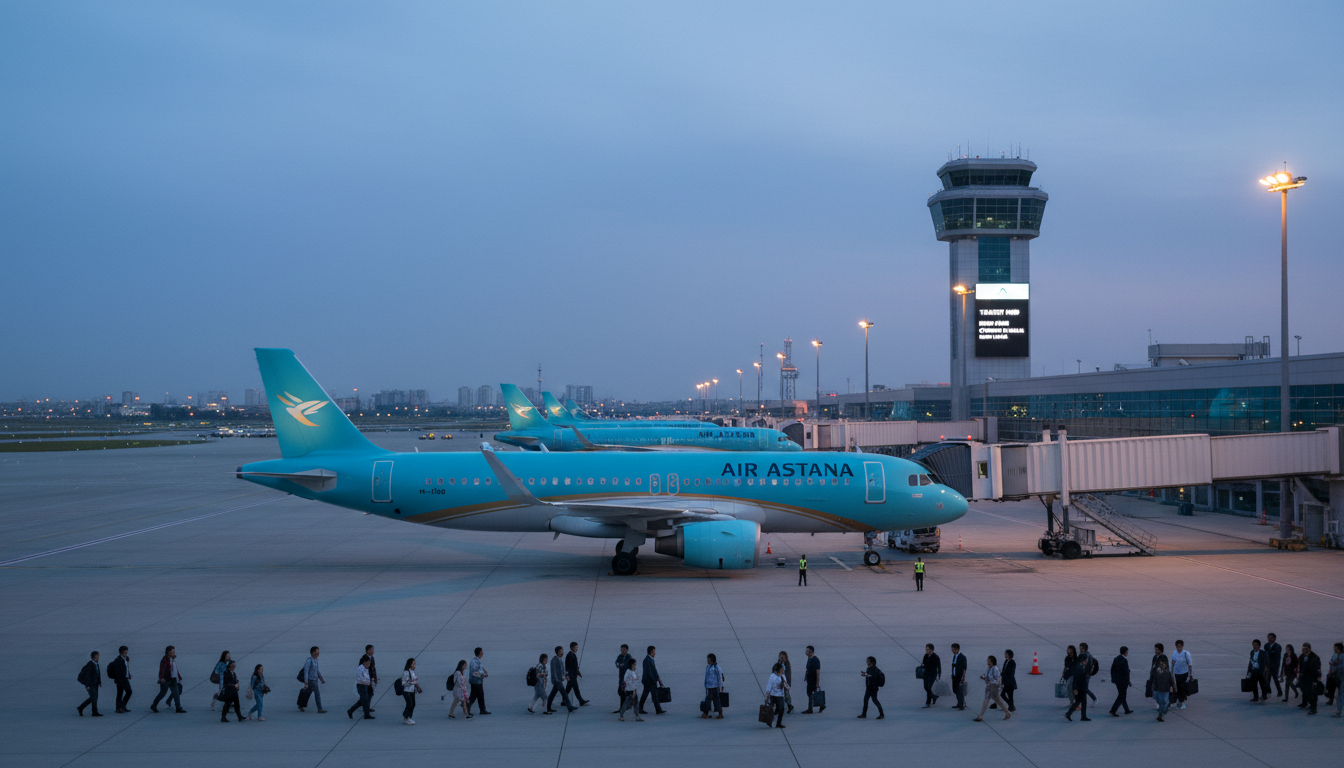
Kazakhstan’s national carrier, Air Astana Group, is strategically expanding its international network. This initiative aims to bolster the country’s position as a regional transit hub, evidenced by a significant increase in international transit passenger traffic.
The airline's growth reflects a concerted effort to leverage Kazakhstan’s geographic advantage. By connecting Asian and European markets, Air Astana seeks to capitalise on evolving global travel patterns and enhance regional economic integration.
Kazakhstan's Evolving Aviation Strategy
Kazakhstan has long aimed to position itself as a multimodal transit corridor. Air Astana’s recent performance underscores significant progress within the aviation sector, aligning with a broader national economic diversification agenda.
Developing robust air connectivity is critical for fostering trade, tourism, and foreign direct investment. The emphasis on transit traffic indicates a deliberate policy to capture a greater share of intercontinental passenger flows.
Strategic Network Expansion
Air Astana Group reported a 65% increase in international transit passenger traffic during the first quarter of 2026. Total transit traffic exceeded 137,000 passengers, including over 48,000 international transit passengers.
The airline’s strategy involved a calculated reallocation of capacity. Resources were shifted from certain Middle Eastern routes towards more lucrative, high-demand corridors across Asia and beyond.
Key destinations driving this expansion include major Asian hubs like Seoul, Bangkok, Phuket, Phu Quoc, and Male. Further links to Istanbul, Delhi, Tashkent, and Tbilisi connect Kazakhstan to significant economic and tourist centres.
Further cementing its network, Air Astana launched a direct service from Almaty to Shanghai in 2026. This established a crucial link with China’s economic powerhouse.
Upcoming plans include new flights from Astana to Guangzhou, China; Larnaca, Cyprus; and Dalaman, Türkiye. This will broaden the carrier's reach into both East Asia and the Mediterranean.
Economic Implications and Transit Hub Ambitions
The substantial increase in transit passengers carries direct economic benefits for Kazakhstan. It contributes to airport service revenues and supports ancillary industries, bolstering the national economy.
Enhanced connectivity also facilitates business travel, potentially boosting foreign investment and fostering stronger commercial ties. This aviation growth is integral to Kazakhstan’s broader economic diversification efforts.
Such an expansion positions Kazakhstan as a convenient intermediary for travellers between Europe and Asia. This offers a potentially more direct and efficient alternative to traditional hubs and can stimulate inbound tourism.
Geopolitical Connectivity
Kazakhstan’s expanded air network plays a critical role in its foreign policy objectives. It fosters stronger diplomatic and economic ties with key partners across Eurasia.
Direct links to cities like Shanghai and Guangzhou strengthen the country's engagement with China, a major economic and strategic partner. This aligns with Kazakhstan's multi-vector foreign policy approach.
The addition of routes to destinations like Istanbul and Dalaman reinforces historical and cultural connections with Türkiye. Improved connectivity to Tbilisi and Tashkent also enhances intra-regional integration.
Outlook and Future Trajectory
Air Astana’s current trajectory suggests a sustained commitment to its international expansion strategy. This is driven by both market demand and national economic imperatives for diversification.
Maintaining this growth momentum will require ongoing investment in fleet modernisation and route development. The competitive landscape for transit traffic in Eurasia remains dynamic, necessitating continuous adaptation.
Kazakhstan’s ambition to solidify its position as a major air transit hub appears increasingly attainable. These deliberate and successful aviation sector developments mark a significant step towards realising this strategic vision.