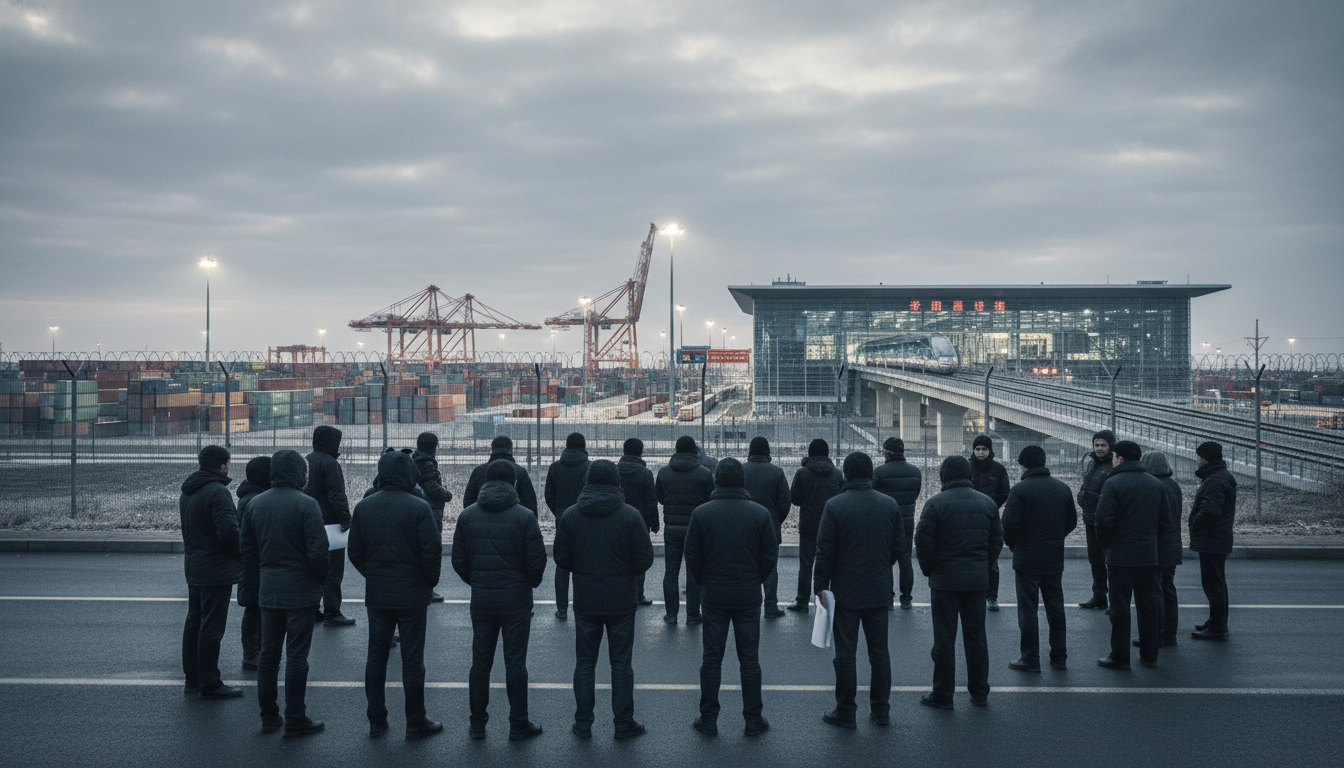
The imminent verdict for 19 activists in Kazakhstan, who organised a protest against China's mass internment camps in Xinjiang, carries significant implications for Nur-Sultan's domestic and foreign policy calculus. This closed-door trial, following demonstrations concerning the plight of Uyghur and other Muslim minorities, casts a spotlight on the delicate balance the Kazakh government navigates between internal dissent and external geopolitical pressures.
The outcome will be closely scrutinised as a clear indicator of China's expanding influence within the Central Asian state. It will signal the extent to which Nur-Sultan is prepared to accommodate Beijing's interests, potentially at the expense of public sentiment and its own stated commitments to human rights.
Domestic Political Implications
The Kazakh authorities' handling of these protests and the subsequent trial underscores a long-standing tension between maintaining state stability and accommodating public demands. The decision to conduct proceedings behind closed doors suggests a sensitivity to the specific nature of the charges and the broader geopolitical context. Such opacity can, however, fuel further disquiet among segments of the population.
This situation presents a challenge to Nur-Sultan's image regarding freedom of assembly and expression. While the government frequently cites stability as paramount, the suppression of protests related to ethnically charged issues carries a particular domestic resonance, especially given the shared heritage across the border. The verdict will therefore serve as a barometer of the state's tolerance for activism on sensitive foreign policy matters.
Deepening Economic Linkages with China
Kazakhstan's economic interdependence with China forms a foundational layer for Beijing's considerable influence. China is a major trading partner and investor, providing critical capital for infrastructure projects, notably those under the Belt and Road Initiative. This economic engagement spans energy, transport, and manufacturing sectors, creating deep linkages that shape Nur-Sultan's policy considerations.
The reliance on Chinese investment and market access significantly constrains Kazakhstan’s room for manoeuvre on issues perceived as sensitive by Beijing. This economic leverage allows China to exert pressure on Nur-Sultan to ensure a conducive environment for its strategic interests, often overriding domestic concerns. Kazakhstan also serves as a crucial transit corridor for Chinese goods destined for European markets, further entrenching the economic relationship.
The Xinjiang Human Rights Dilemma
The protests explicitly targeted China's policies in Xinjiang, particularly the mass internment camps for Uyghurs and other Muslim minorities. This issue resonates profoundly within Kazakhstan due to the presence of ethnic Kazakhs among those detained across the border. Many Kazakh citizens have family members or relatives who have been affected, leading to strong emotional and cultural ties to the situation.
This direct connection has generated significant public pressure on the Kazakh government to address the plight of ethnic Kazakhs in Xinjiang. While Nur-Sultan has occasionally raised concerns through diplomatic channels, its official responses have largely remained circumspect, reflecting the prevailing geopolitical realities and the imperative of maintaining good relations with Beijing. The current trial therefore crystallises the dilemma between advocating for its diaspora and managing a powerful neighbour.
Kazakhstan's Geopolitical Balancing Act
Kazakhstan operates within a complex geopolitical landscape, necessitating a delicate balancing act between major powers. Traditionally aligned with Russia within security frameworks like the Collective Security Treaty Organisation, it has also actively pursued a multi-vector foreign policy to diversify partnerships with the European Union, the United States, and various Asian states. Managing China's growing footprint is an integral part of this strategy.
The imperative to maintain strategic autonomy while securing economic prosperity guides Nur-Sultan's foreign policy. This entails avoiding overt confrontation with any major power, including China. The trial’s outcome will reveal the limits of this balancing act, particularly when domestic human rights concerns intersect with the geopolitical interests of a powerful neighbour.
Trajectory of Sino-Kazakh Relations
The pending verdict will inevitably shape the trajectory of future bilateral relations between Kazakhstan and China. A stringent sentence for the activists would likely be interpreted by Beijing as an affirmation of Nur-Sultan's commitment to maintaining a stable and cooperative relationship, prioritising state-to-state ties over protest-driven dissent. Conversely, a lenient outcome, though unlikely given the closed nature of the trial, could signal a greater willingness to navigate public concerns.
The challenge for Kazakhstan will remain in managing its vital economic relationship with China while addressing the legitimate concerns of its populace regarding human rights in Xinjiang. Nur-Sultan faces the ongoing task of cultivating economic benefits without appearing to compromise its sovereignty or its citizens’ fundamental rights. The outcome of this trial will thus be a key indicator of where Kazakhstan draws these lines.