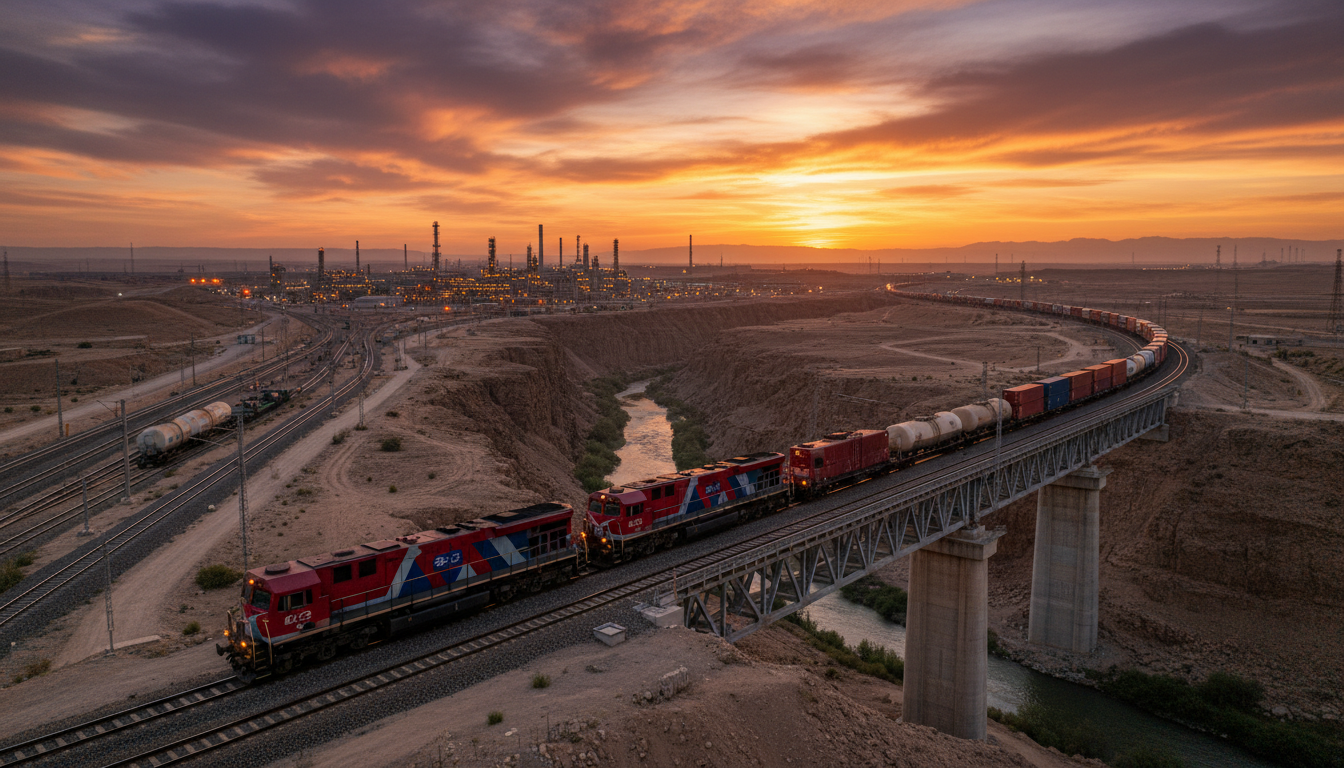
Iran is aggressively pursuing a major expansion of its rail freight capacity, a move that extends far beyond mere infrastructure enhancement. This strategic focus on strengthening its broader transportation network signals a deeper geopolitical calculus at play, one that demands our close attention.
We observe that this push represents a crucial component of Tehran’s long-standing strategy to build economic resilience against external pressures. Enhancing land-based transit options offers a vital alternative to maritime routes, which have historically been more susceptible to international sanctions and scrutiny.
Such an undertaking is not simply about boosting domestic trade volumes; it clearly aims to position Iran as an indispensable transit hub across the wider Eurasian landmass. This ambition seeks to project Iranian influence and cement its role in future trade architectures.
A key facet of this broader vision is undoubtedly Iran’s pivotal role in the International North-South Transport Corridor (INSTC). By strengthening its rail network, Iran enhances its capacity to serve as a crucial transit bridge, connecting markets from India to Russia and beyond.
This geographical advantage allows Iran to offer a robust land link, significantly reducing transit times and costs compared to traditional sea routes through the Suez Canal. For Tehran, robust rail infrastructure is leverage in shaping regional trade flows.
Moreover, the expansion deepens Iran’s connectivity with its northern neighbours in Central Asia and the Caucasus. Offering these landlocked states diversified and reliable access to global markets via the Persian Gulf is a powerful diplomatic and economic tool.
For Central Asian economies, often reliant on a limited number of export routes, Iran’s enhanced rail network presents an invaluable opportunity. It fosters greater economic independence and offers strategic diversification away from established, sometimes constrained, corridors.
We recognise, however, that the realisation of such a grand vision involves significant investment and complex regional cooperation. Navigating the geopolitical intricacies of the wider region, with its competing interests, will undeniably present ongoing challenges.
This rail initiative should be understood within the broader context of a shifting global order, where major and regional powers are increasingly prioritising self-sufficiency and alternative trade routes. Iran is actively sculpting its place in this evolving landscape.
Ultimately, Iran's drive to significantly increase its rail freight capacity is a multifaceted strategic play. It aims to bolster its national economy, strengthen regional influence, and fundamentally reshape key trade arteries across Eurasia.
For observers in Central Asia and the Caucasus, Iran’s rail ambitions are more than an economic footnote; they signal a deliberate push for deeper integration and a recalibration of regional power dynamics. We anticipate these developments will have long-term repercussions.