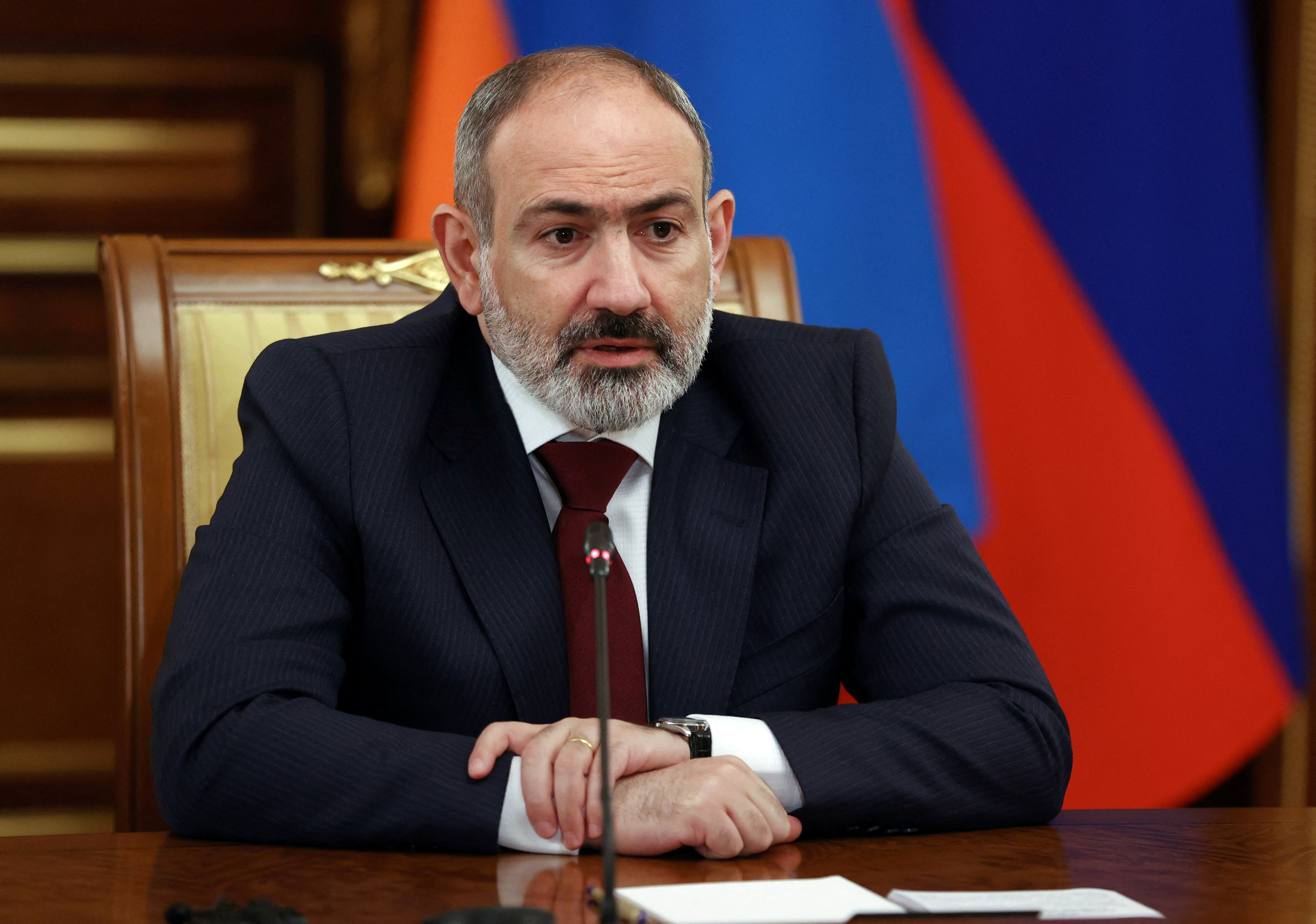
Armenia's official campaign period began on 8 May with 19 political forces registered to compete. Twelve days remain before the 7 June vote. The international framing — Pashinyan and the West versus Karapetyan and Russia — is not wrong, but it flattens a contest shaped as much by household economics and institutional distrust as by geopolitical alignment.
Prime Minister Nikol Pashinyan has taken leave from office to campaign. His Civil Contract party opened in the southern Syunik province — a region that bore the brunt of the 2020 war and the 2023 displacement of Nagorno-Karabakh Armenians, and where the sense of territorial loss is most acute. His pitch centres on EU integration, economic modernisation and the argument that the peace process with Azerbaijan — however painful — was the only realistic path.
While relations with the EU and Russia remain key issues, it is also important to appreciate the internal dynamics of the country going into this vote.
The Karapetyan factor
The most consequential opposition force is Strong Armenia, an alliance built around Samvel Karapetyan — an Armenian-Russian-Cypriot billionaire whose Tashir Group controls Armenia's electricity distribution network and has extensive ties to the Russian construction industry, including long-standing contracts with Gazprom. Karapetyan has been under house arrest since December on charges of inciting violence and financial crimes, which his supporters describe as politically motivated. He addressed his campaign's opening rally via video link from detention.
The legal obstacle is structural: Karapetyan holds Russian and Cypriot citizenship in addition to Armenian, which under Armenia's constitution bars him from parliamentary or government office. Strong Armenia's position is that he would serve in an advisory capacity; critics note this amounts to a shadow premier arrangement that bypasses constitutional norms entirely.
Carnegie Endowment's April assessment placed Civil Contract ahead in polling, with roughly 26 percent support — enough to win, given the fragmented opposition, but not a ringing mandate. Around a third of voters remained undecided at that point. The Kremlin, according to multiple reports, is backing Karapetyan. Putin's recent meeting with Pashinyan — in which the Russian president complained about Armenia's de facto withdrawal from the CSTO and the treatment of pro-Russian political figures — underlines Moscow's stake in the outcome.
What the result will mean
A Civil Contract victory, widely expected by international observers including the IRI mission that visited in late April, would give Pashinyan a mandate to continue the EU integration trajectory codified in the EU Integration Act adopted late last year. OSCE/ODIHR has deployed a full Election Observation Mission with 30 long-term monitors; their preliminary findings will be presented at a press conference on 8 June.
A surprise Strong Armenia performance — or a coalition that requires Karapetyan-aligned partners — would complicate the EU accession path, create friction with the TRIPP corridor implementation, and test the durability of the Washington Agreement with Azerbaijan. The election is consequential beyond Armenia's borders precisely because so many regional processes depend on Yerevan's current trajectory holding.