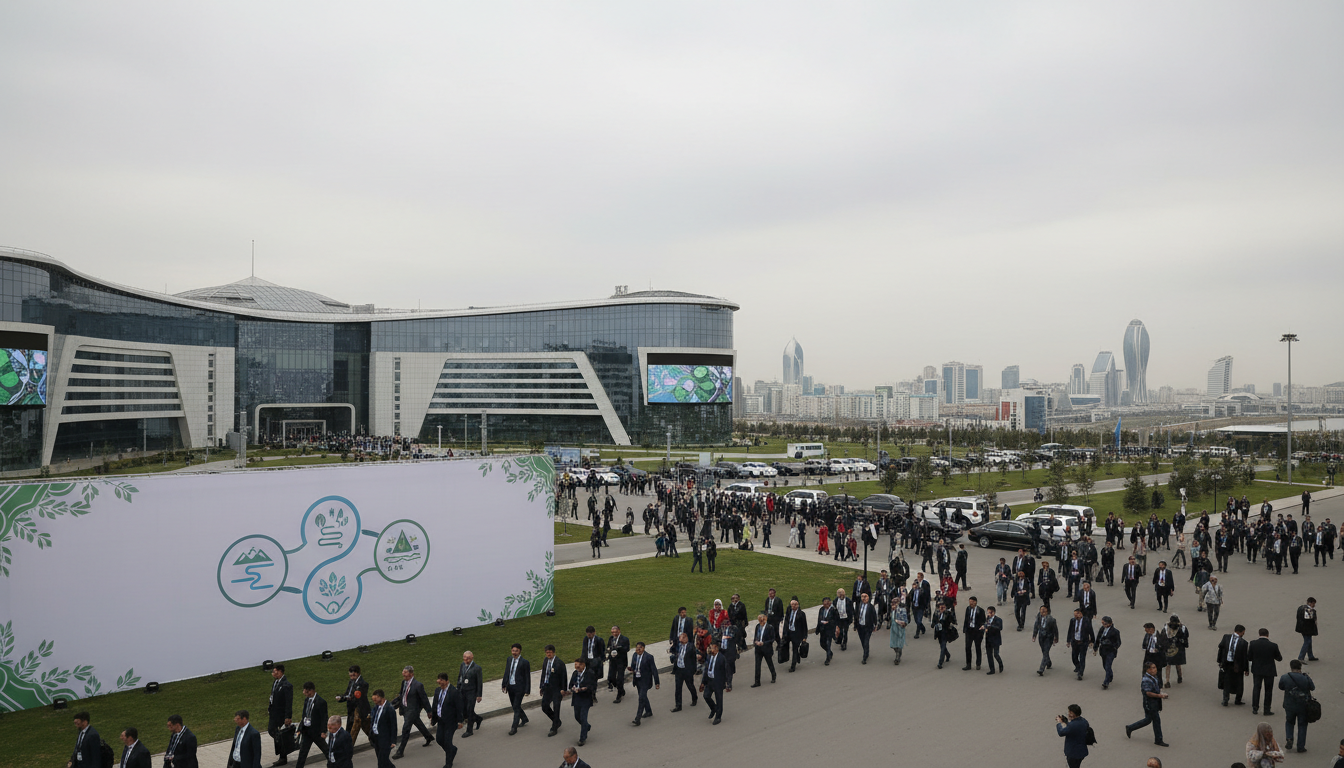
The upcoming Regional Ecological Summit in Astana, scheduled for April 22–24, signifies more than a routine environmental conference. It represents a deliberate and sophisticated act of regional statecraft by Kazakhstan, aiming to redefine the parameters of Central Asian cooperation.
The formal ambition extends beyond typical diplomatic gatherings. Participants anticipate a joint declaration and a Regional Program of Action for 2026–2030, granting the event a concrete, forward-looking mandate. This is amplified by the scale of engagement, with 18 United Nations agencies co-organising sessions and workshops.
Kazakhstan presents this summit as a region-wide platform. Its central purpose is to test whether ecology can sustain a more regular pattern of cooperation among Central Asian states, all under multilateral auspices. This strategy underscores Astana’s intent to foster deeper integration through shared vulnerabilities.
Crucially, Astana has broadened the concept of "ecology" beyond narrow climate policy to encompass water, health, food systems, and natural-resource management. This expansive framing is politically astute, creating a wider basis for dialogue.
The broadening allows for the inclusion of multiple shared pressures faced by the five Central Asian states. It deliberately connects issues where their interests naturally converge, forming a basis for cooperation even where they might diverge elsewhere.
A climate-only framework would have proved too restrictive for the region's complex challenges. The shared constraints extend to acute water stress, pervasive land degradation, and significant cross-border environmental risks, alongside public-health effects.
This summit does not appear in a vacuum; it builds on earlier regional momentum. President Tokayev’s initial proposal, made in June 2023, developed from the Green Agenda Regional Program for Central Asia adopted in Cholpon Ata in July 2022.
The Green Agenda was a substantial commitment, encompassing decarbonisation, alternative energy, and rational water use. Subsequent UNDP material tied this program more explicitly to broader regional cooperation on climate action and water management. This shows a clear line of policy development.
The considerable United Nations presence underscores the international community’s endorsement of this expanded ecological approach. With 18 UN agencies actively co-organising, the summit transcends ceremonial status, establishing a dense working structure for tangible outcomes.
The agenda itself reveals a cohesive policy bundle. It integrates climate transition, adaptation, food security, ecosystems, resource use, pollution, and finance under a single frame. The operative goals are concrete: reduce emissions, improve energy efficiency, and safeguard vital water resources.
By cultivating cooperation on these universally recognised ecological issues, Astana aims to build crucial trust and shared frameworks. This could potentially create precedents for collaboration in areas where interests traditionally diverge. It represents a subtle, yet effective, exercise of regional influence.
Ultimately, the Astana summit reflects a sophisticated act of statecraft. Kazakhstan is leveraging the undeniable imperative of ecological preservation to position itself as a central facilitator of Central Asian stability and sustainable development. It is an investment in shared problem-solving for the region’s long-term future.