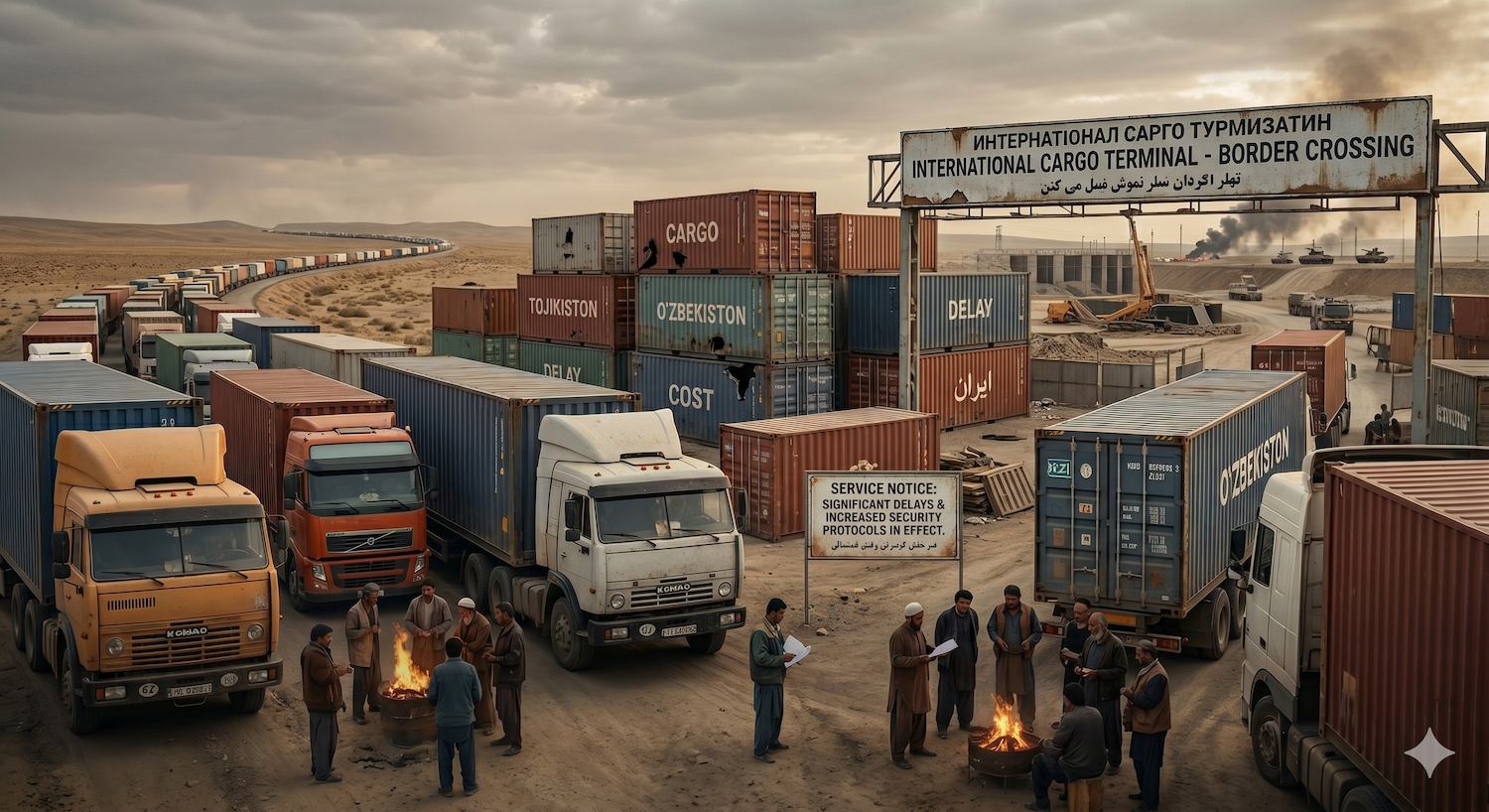
The geopolitical landscape of the Middle East has shifted violently following the launch of US and Israeli air strikes on Iran. While the immediate destruction is concentrated within Iranian borders and retaliatory strike zones across the Mideast, a secondary economic crisis is quietly unfolding hundreds of miles to the north.
Central Asian nations—landlocked and heavily dependent on Iranian transit corridors—are now grappling with the harsh reality of being collateral damage in a regional conflict.
The Transit Chokepoint
For countries like Uzbekistan, Turkmenistan, and Tajikistan, Iran serves as a vital gateway to global markets. The port of Chabahar and the extensive Iranian rail network provide the shortest and most cost-effective routes to the Indian Ocean and European markets.
With the outbreak of hostilities, these trade arteries have effectively been severed:
- Border Gridlock: Cargo terminals at key crossings are seeing unprecedented backlogs as security protocols tighten and logistics companies hesitate to enter active conflict zones.
- Skyrocketing Freight Costs: Logistics providers have introduced "war risk" surcharges, nearly doubling the cost of shipping containers through the region overnight.
- Energy Uncertainty: Disruptions to regional infrastructure threaten the flow of refined petroleum products, a move that is already driving up fuel prices at pumps in Tashkent and Dushanbe.
Supply Chain Shockwaves
The timing could not be worse. Still recovering from the global inflationary pressures of recent years, Central Asian economies are sensitive to even minor price hikes.
"We aren't just talking about a delay in luxury goods," says an Almaty-based trade analyst. "We are talking about the basic materials for construction, agricultural machinery, and pharmaceutical supplies that keep our economies moving. If the Iranian route stays closed or contested, the 'rising costs' headline will soon become a 'shortage' headline."
A Search for Alternatives
Governments in the region are frantically looking for workarounds. There is renewed urgency behind the Middle Corridor (the Trans-Caspian International Transport Route), which bypasses both Russia and Iran by crossing the Caspian Sea to Azerbaijan and Georgia.
However, the Middle Corridor lacks the capacity to absorb the massive volume of trade currently displaced from the Iranian route. Developing the necessary infrastructure will take years—time that Central Asian businesses, currently watching their profit margins evaporate at stalled border crossings, simply do not have.
As the conflict in the Mideast continues to escalate, the "fallout" is no longer just a metaphor. For the people of Central Asia, it is a tangible burden reflected in every delayed shipment and every increase in the price of bread.