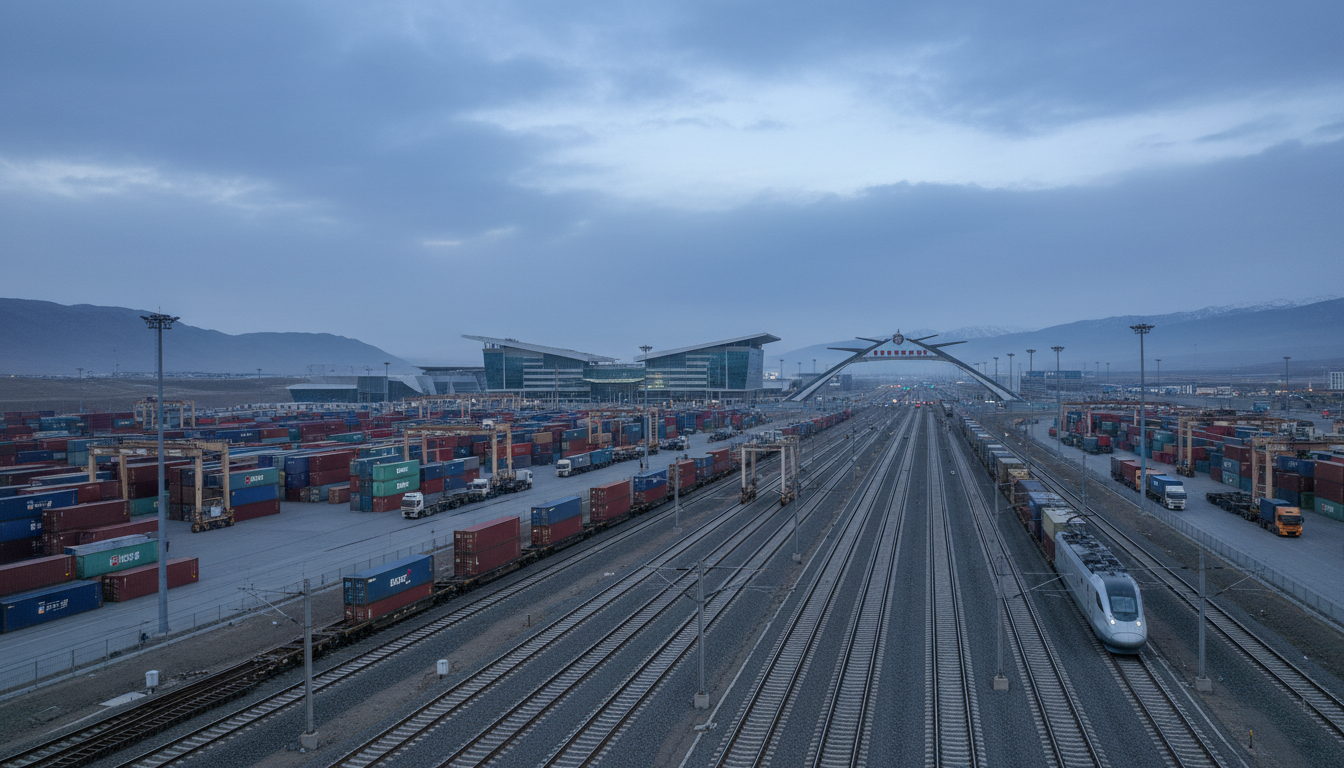
Customs officials from the Kyrgyz Republic and China's Xinjiang Uygur Autonomous Region recently conducted a joint on-site survey of checkpoints along their shared border, 24.kg reported. This collaborative effort took place between April 13 and 17, 2026, signaling a focused bilateral approach to enhancing cross-border operations.
The primary objective of the five-day survey was to assess existing infrastructure and procedures, aiming to increase throughput capacity. Both sides seek to streamline the flow of goods and people, addressing potential bottlenecks that currently impede bilateral trade volumes and transit efficiency.
For Kyrgyzstan, a landlocked nation, improved border functionality is critical for economic development and diversification. Efficient transit routes via China are essential for accessing global markets and positioning the country as a vital link in regional trade corridors, aligning with its strategic goals.
China, through its Xinjiang region, views enhanced border capacity as integral to the Belt and Road Initiative (BRI) and its wider connectivity agenda. Improving logistical efficiency on its western frontier facilitates trade with Central Asia and beyond, strengthening Xinjiang's role as a pivotal gateway for regional commerce.
The joint teams meticulously inspected key border posts, evaluating operational mechanisms, digital systems, and the physical state of customs facilities. This hands-on assessment aimed to identify specific areas where procedural harmonisation or infrastructural upgrades could yield tangible improvements in processing times and volume.
This targeted customs cooperation underscores the deepening economic ties between Bishkek and Beijing, with China remaining a principal trading partner and investor in Kyrgyzstan. Such technical exchanges are fundamental to managing the complexities of a rapidly expanding trade relationship and ensuring its continued growth.
The survey is expected to inform subsequent joint action plans, potentially leading to specific investment projects or the adoption of harmonised customs protocols. Continued dialogue and practical measures are anticipated to follow, aimed at translating the survey's findings into concrete improvements for border management.
The initiative further highlights China's expanding influence in Central Asia, where it increasingly invests in infrastructure critical for regional connectivity. Efficient borders with partners like Kyrgyzstan are central to Beijing’s geopolitical and economic strategy in the Eurasian space, enhancing its presence and trade facilitation.
Ultimately, these coordinated efforts reflect a mutual commitment to optimising a crucial trade artery for both nations. The enhanced efficiency of the Kyrgyz-Chinese border holds significant implications not only for bilateral commerce but also for the broader regional integration and economic prospects of Central Asia.