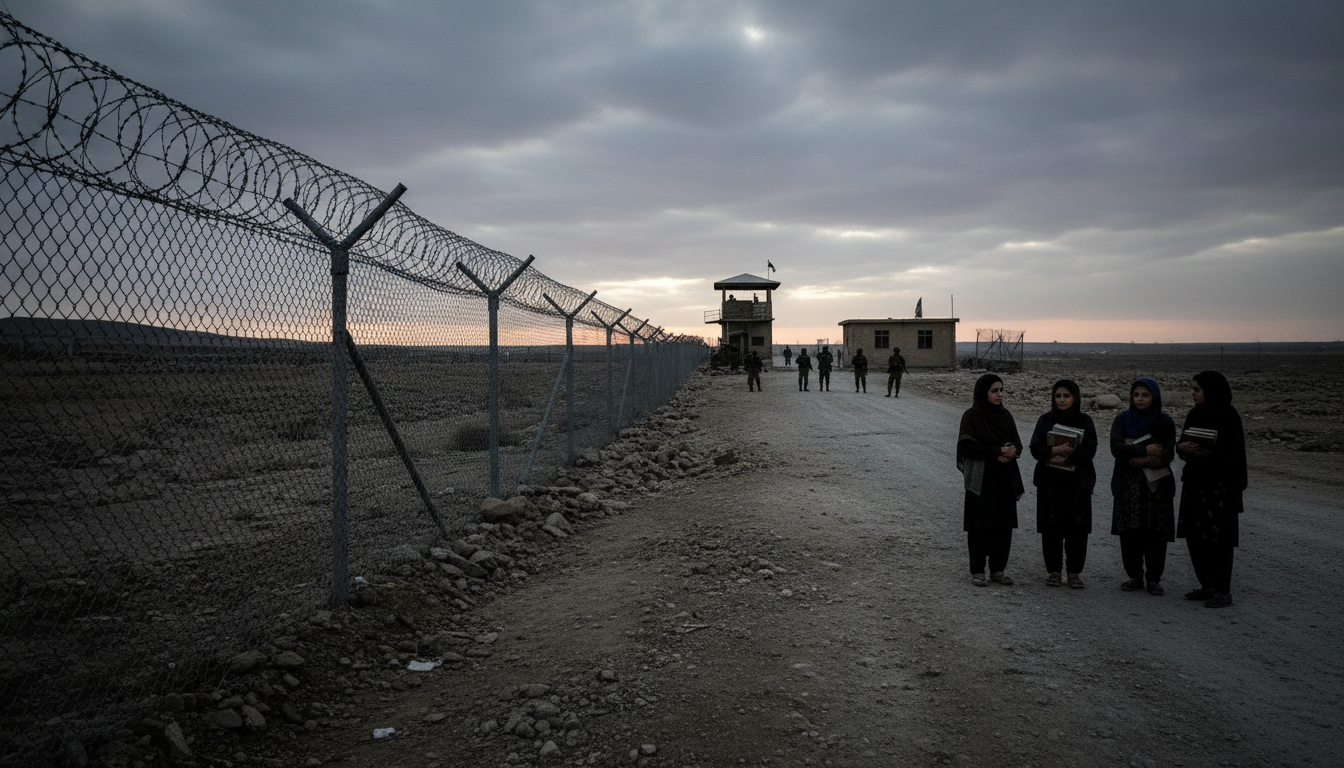
Education has become a profound act of resistance in Afghanistan. For a generation born under the first Taliban regime, like our contributor Fareshtah, the right to learn was a hard-won freedom, not a given. This personal journey reflects a wider national struggle against oppression.
Many recall the excitement of classrooms after 2001, where uniforms symbolised a future liberated from draconian decrees. Fareshtah, born in Ghor in 1996, embraced this shift, pursuing higher education to become a successful attorney.
Cautious optimism greeted US-Taliban peace talks in 2020, offering fragile hope for a stable future. Yet, conflict intensified between the Taliban and government forces, overshadowing young Afghans’ aspirations. Universities adapted with online and in-person classes.
Then came the abrupt end to those nascent dreams. On August 13, 2021, conflict reached Herat, Fareshtah’s home city, and the next day brought devastating news: "Put it down, it's over." Hopes for education and professional advancement evaporated as provinces swiftly collapsed.
The immediate despair was profound, like being violently awoken from a cherished dream. Yet, resilience prevailed; private universities reopened, followed by public ones six months later. Fareshtah, among many, returned with vigour, completing her final semesters and thesis.
This brief respite was shattered on December 20, 2022, when the Taliban decreed girls were prohibited from attending universities. This targeted assault on women's education came just days before Fareshtah's thesis defence and graduation. Triumph became crushing disappointment.
Her attempt to defend her thesis became a stark illustration of the regime’s brutal enforcement. At the university gate, a Taliban member aggressively blocked her path, grabbing her bag and threatening violence for trying to complete her studies.
This experience, though personal, is emblematic of the broader reality facing Afghan women and girls. Their aspirations for self-determination and societal contribution are met with armed force and regressive policies. This suppression carries profound implications beyond Afghanistan’s borders.
The regional implications of this systematic denial of women’s rights are significant. A stable Central Asia hinges on progressive values, yet Afghanistan's trajectory under the Taliban exports instability and extremism. This demands sustained international attention and a unified regional response.
This generation, having known the freedom of education and professional pursuit, will not be silenced indefinitely. Their resistance, whether overt or subtle, through defiance or collective memory, represents an enduring spirit. It refuses to be extinguished by fundamentalist decrees.
The fight for educational equity and women’s agency in Afghanistan is far from over; it is a long-term struggle against deeply entrenched ideology. The courage displayed by individuals like Fareshtah ensures that the dream of a future where all can learn and thrive remains alive, destined to prevail.