The Regional Ecological Summit (RES 2026) opens this Wednesday in Astana, officially framed by a "Shared Vision for a Resilient Future" incorporating practical regional solutions, a Joint Declaration, and a 2026-2030 Program of Action. This diplomatic language, however, masks a more pressing reality, with water and energy officials in Tashkent, Bishkek, and Astana confronting a region that is drying out faster than its infrastructure and political mechanisms can adapt. This gives the gathering a sharper urgency compared to previous environmental summits, particularly concerning two critical issues: the management of winter water-sharing arrangements ahead of the irrigation season, and the growing constraints on the Middle Corridor imposed by the shrinking Caspian Sea (Times of Central Asia).
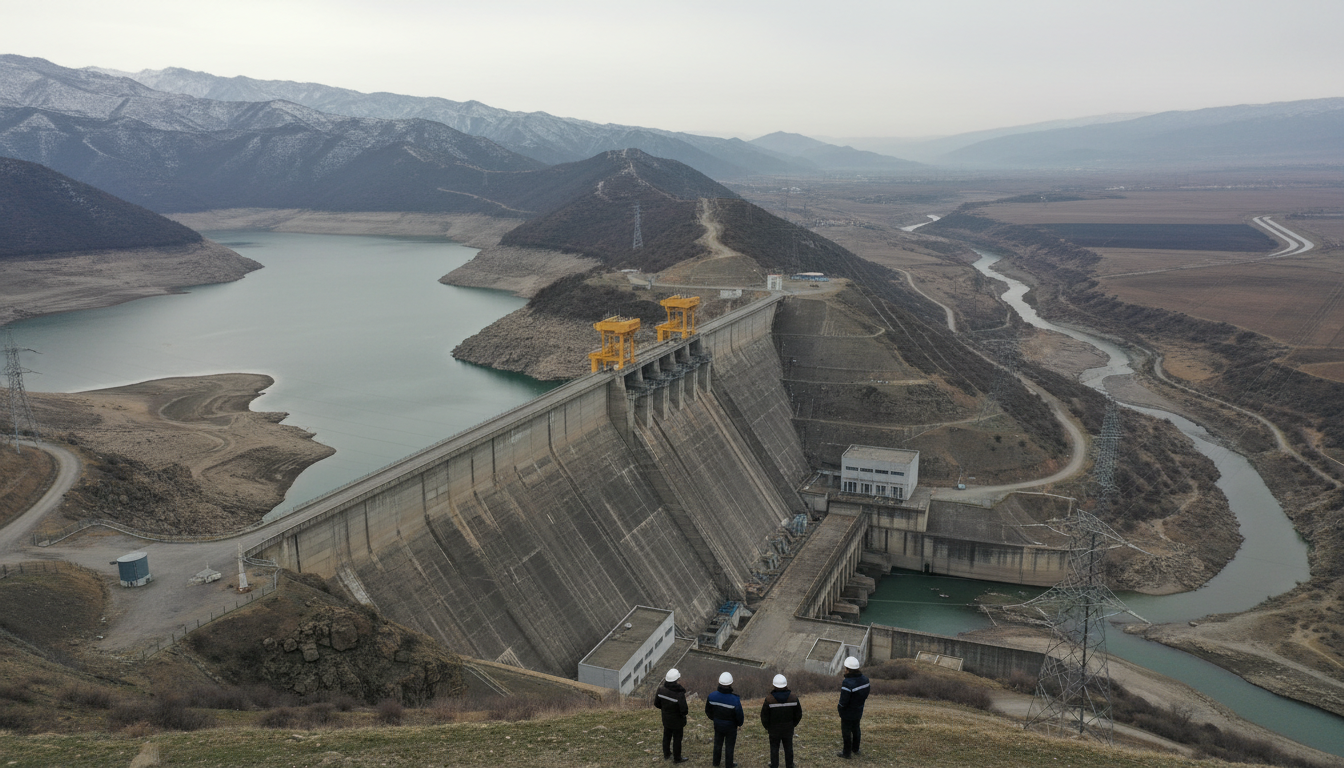
The most immediate pressure point involves the Toktogul Reservoir in Kyrgyzstan, central to a fragile "winter-for-summer" swap. An agreement reached late 2025 sees Kyrgyzstan limiting winter hydropower generation to preserve water for downstream Kazakh and Uzbek farmers, in exchange for electricity supplies from its neighbours. While this arrangement remains active, its durability faces a significant test as summer demand for water increases. A key question for the summit is whether Kazakhstan and Uzbekistan will provide sufficient power support, allowing Kyrgyzstan to conserve water without reigniting historical upstream-downstream tensions. For the downstream states, this complex negotiation is not merely an ecological concern but also an agricultural and political imperative (Times of Central Asia). Concurrently, the shallowing of the Caspian Sea, long considered a long-term issue, has become an operational challenge in 2026. Recent reporting indicates Aktau port is operating at an average depth of 4.5 metres, substantially below the 6.5 to 7 metres required for full capacity operations. The summit will highlight the UNDP-linked "Integrated Management of Seascapes" project, an initiative aiming to balance the critical need for dredging and port access with the protection of the northern Caspian’s delicate ecosystem. This tension directly impacts trade, shipping capacity, and the viability of the Middle Corridor itself (Times of Central Asia).
Beyond immediate water management, the summit addresses broader regional cooperation and strategic infrastructure. One concrete agenda item is the National Water Resources Information System, which the Kazakh government states will enter industrial operation by the end of 2026. This system aims to automate 103 irrigation canals in southern Kazakhstan, supported by $1.15 billion in financing from the Islamic Development Bank. A broader regional test will be the willingness of neighbouring states to share sufficient data to enable a robust, cross-border water monitoring system, providing officials with a clearer overview of shared resource management. Alongside the water agenda, the Green Energy Corridor remains a significant project aligning Kazakhstan, Azerbaijan, and Uzbekistan. This initiative involves transmitting green electricity to Europe via a subsea cable across the Caspian Sea, with CESI currently finalising the feasibility study. The project underscores a shift towards an export model less reliant on hydrocarbons, demonstrating how environmental pressures and economic strategies are increasingly intertwined, offering Central Asian governments new avenues for regional integration and financing linked to European demand. Furthermore, the less publicised Regional Green School Platform is a crucial component, aiming to integrate climate resilience into school curricula. This responds to UNICEF data indicating 23 million children in Central Asia are exposed to high or very high levels of climate hazards, framing climate education as a foundation for long-term social stability (Times of Central Asia). While the RES-2026 EXPO will feature over 300 companies, the true measure of the summit will be its ability to deliver tangible progress on these interconnected environmental and geopolitical challenges.