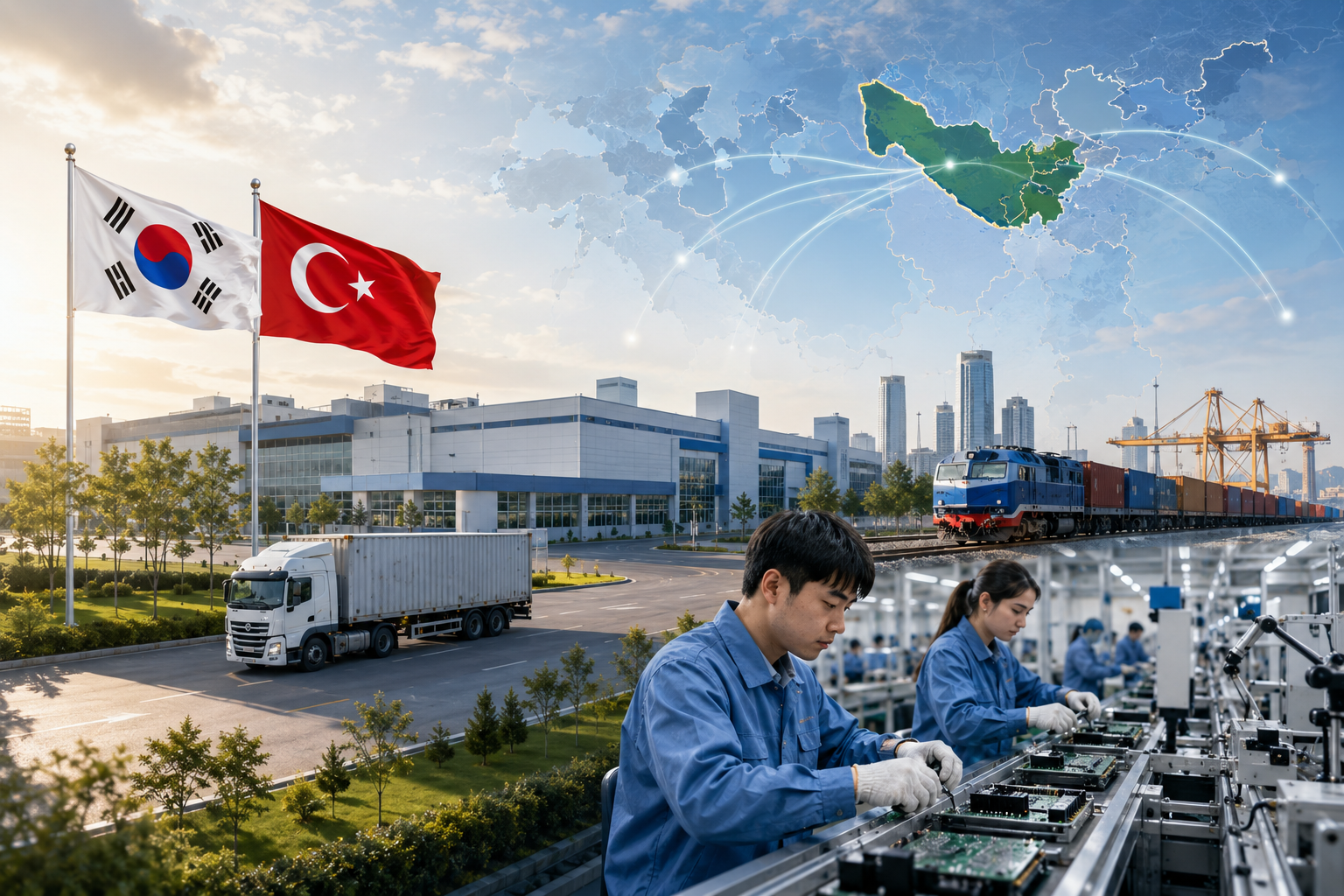
Uzbekistan's ongoing economic reform programme under President Shavkat Mirziyoyev continues to generate foreign investment interest, with manufacturers from South Korea and Turkey emerging as the most active new entrants in the country's special economic zones.
South Korean companies — particularly in electronics assembly and automotive components — have expanded their Uzbek operations significantly over the past two years, drawn by competitive labour costs, improving logistics infrastructure, and a regulatory environment that has become more predictable following a series of business law reforms. Turkish textile and construction firms have similarly increased their presence.
The government has prioritised the development of special economic zones as a vehicle for attracting export-oriented manufacturing. The Navoi Free Economic Zone and several newer zones closer to the Kazakh border have recorded increased occupancy and investment commitments.
Uzbekistan's attraction as a manufacturing location is partly structural: it is the most populous country in Central Asia with approximately 36 million people, providing a significant domestic market alongside export potential. Its position on the Middle Corridor — connecting China to Europe via the Caspian — gives it transit value that is growing as companies seek to diversify away from Russian-controlled routes.
Analysts note that the reform programme has been uneven: the financial sector remains opaque by international standards, and some business environment improvements have been slower to materialise outside the special economic zones. But the trajectory is broadly positive, and Uzbekistan is increasingly competitive with Kazakhstan for manufacturing investment in the region.
Source: Kun.uz